

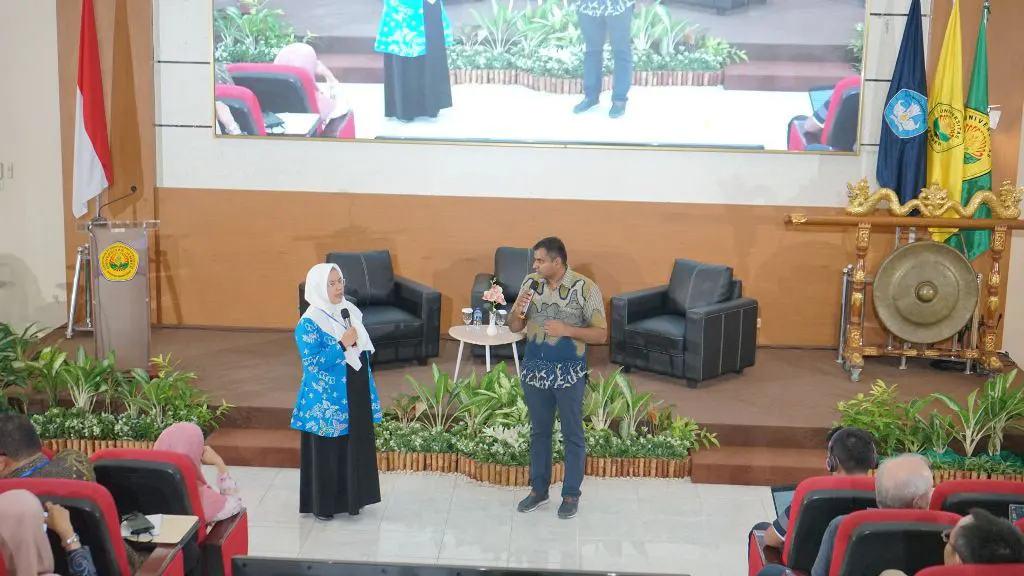
Agromedicine – The Faculty of Medicine (FK) and the Faculty of Dentistry (FKG) at the University of Jember (UNEJ) successfully organized an international Expert Seminar and Workshop themed “Emerging and Re-Emerging Infectious Diseases” and “Hands-on Training on Basic Principles of Biosafety.” The event took place over seven days, starting on April 28, 2024, at the FK UNEJ Auditorium, attracting academics, researchers, and practitioners from various countries.
The event opened with a captivating traditional karawitan musical performance from Jember, creating a culturally rich atmosphere for the international forum. This traditional performance served as a meaningful introduction to an event that fostered cross-cultural and international collaboration.
Following the opening performance, the Director of PACE-UP, Thirumalaisamy P. Velavan, delivered a brief report outlining the objectives and expectations of the seminar and workshop. He emphasized the importance of international collaboration in addressing global challenges related to infectious diseases. “Through this event, we hope to strengthen global partnerships and share knowledge to tackle the evolving threats of infectious diseases,” he stated.
The event also received special attention from Guido Schnieders, Director of DAAD Jakarta, who highlighted the significance of such initiatives in promoting academic exchange and innovation in the health sector. He noted that activities like this contribute to improving the quality of research and education across countries.
Additionally, the German Ambassador to Indonesia, Ina Lepel, attended the event and emphasized the importance of bilateral relations between Indonesia and Germany, particularly in education and healthcare. She stated that collaboration between the University of Jember and German institutions serves as a strong example of how international partnerships can bring mutual benefits.
The Rector of the University of Jember, Iwan Taruna, officially opened the event with an inspiring speech underscoring UNEJ’s commitment to supporting internationally recognized academic activities. He expressed hope that the seminar and workshop would generate valuable recommendations for addressing infectious diseases on a global scale.
The seminar featured expert speakers from Indonesia, Germany, Vietnam, and Zambia, who shared insights and the latest research on emerging and re-emerging infectious diseases—one of the major challenges in global health today. Indonesian speakers highlighted the condition of infectious diseases in tropical regions, while international experts provided global perspectives and shared their experiences in outbreak management.
Alongside the seminar, the workshop “Hands-on Training on Basic Principles of Biosafety” offered practical training for participants on fundamental biosafety principles. Participants had the opportunity to practice laboratory techniques essential for preventing disease transmission during research and diagnostic processes.
Throughout the seven-day event, activities were highly dynamic and interactive. Participants actively engaged not only by attending presentations but also through in-depth discussions and Q&A sessions, reflecting their strong enthusiasm for understanding global health issues.
On the final day, the event concluded with a panel discussion summarizing key insights and outlining future steps to enhance international collaboration in tackling infectious diseases. The panelists agreed that cross-country and interdisciplinary cooperation is essential to address future global health challenges.
This Expert Seminar and Workshop not only enhanced participants’ knowledge but also strengthened collaboration between the University of Jember and international institutions, particularly in Germany. The success of this event is expected to pave the way for more international academic programs in the future.
With the conclusion of this event, the University of Jember once again demonstrated its commitment to advancing world-class education and research. Through initiatives like this, FK and FKG UNEJ continue to play an active role in improving global health quality and building strong international partnerships.
Author: AKR