

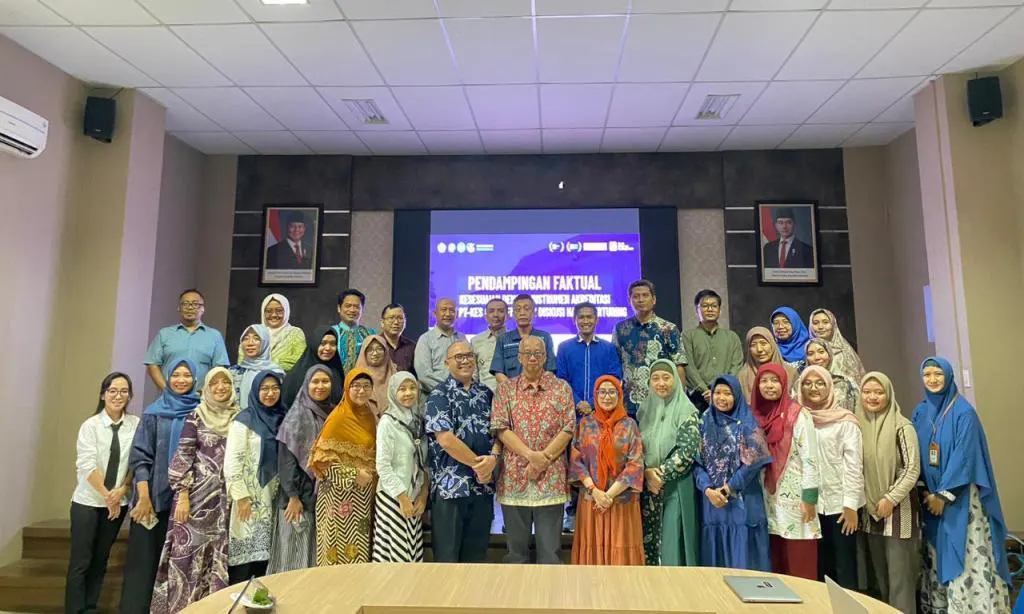
Agromedicine – The Faculty of Medicine, University of Jember (FK UNEJ), once again demonstrated its commitment to improving the quality of education through a comprehensive and well-structured accreditation simulation activity. The activity was led directly by dr. Eko Arisetijono, Sp.N(K), as part of the preparation for the institutional and educational program accreditation process at FK UNEJ.
The accreditation simulation focused on interview sessions involving various key elements of academic governance and educational services. Students, pre-clinical lecturers, clinical lecturers, and educational staff were all involved to ensure the readiness of the entire academic community for the actual accreditation visitation.
The activity began in the FK UNEJ accreditation room with a briefing and technical coordination regarding the simulation process. On this occasion, dr. Eko Arisetijono, Sp.N(K), explained several important points that usually become the assessors’ main concerns, particularly regarding the consistency of educational quality implementation, academic services, and work culture within the faculty.
Following the opening session, the activity continued with a student interview simulation held in the FK UNEJ meeting room. During this session, students were asked various questions related to the learning process, student services, academic facilities, and student involvement in self-development and organizational activities.
The students enthusiastically participated in the simulation and attempted to provide answers that reflected the actual conditions within FK UNEJ. This simulation also served as an evaluation platform for students to better understand the accreditation interview process and improve their ability to deliver information systematically and confidently.
Furthermore, the interview simulation for pre-clinical and clinical lecturers was conducted in the international meeting room of FK UNEJ. In this session, lecturers received questions regarding the learning process, curriculum development, research activities, community service programs, and the learning evaluation system implemented at FK UNEJ.
dr. Eko Arisetijono, Sp.N(K), emphasized the importance of maintaining consistency between the answers given by the academic community and the supporting documents compiled in the Self-Evaluation Report (SER). According to him, interview readiness is one of the essential aspects supporting the success of the accreditation process.
The activity then continued with an interview simulation for educational staff, covering various aspects of administrative services, academic support systems, document management, and services provided to students and lecturers. The staff were also given guidance on how to deliver information effectively and professionally during the accreditation site visit.
This accreditation simulation not only served as a means of evaluating institutional readiness but also became a momentum to strengthen coordination among all divisions within FK UNEJ. Through this activity, all parties were expected to better understand their roles and contributions in supporting the improvement of medical education quality.
By conducting this comprehensive accreditation simulation, FK UNEJ remains optimistic about facing the accreditation process with greater preparedness and confidence. The activity also reflects FK UNEJ’s commitment to maintaining the quality of education, academic services, and creating a competitive and excellent educational environment.
Writer: AKR